
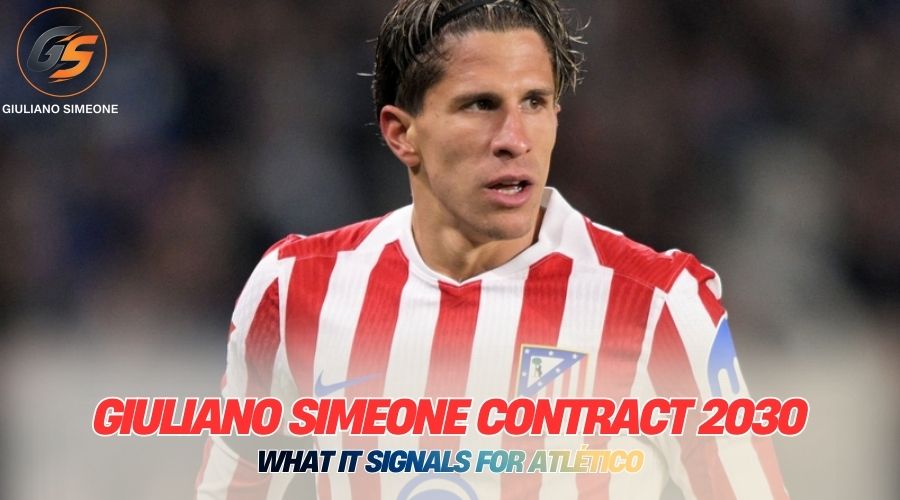
The announcement of Giuliano Simeone contract 2030 is easy to read as routine contract news, but its significance runs deeper. Rather than focusing on duration alone, this deal reflects how Atlético Madrid are positioning specific player profiles within a long-term tactical and structural framework. This article moves beyond the headline to analyze Simeone’s role, the timing of the decision, and what it reveals about modern squad planning in elite football as the game moves toward 2026 and beyond.
Context & Situation Analysis
The timing of Giuliano Simeone contract 2030 is as telling as the length itself. Atlético Madrid are in a phase where squad evolution is being managed carefully, balancing established leaders with players who embody the club’s competitive identity. Renewing a player like Simeone at this moment suggests clarity rather than speculation. This is not a reactionary move driven by a short run of form, but a deliberate decision rooted in internal evaluation.
Atlético’s recent seasons have demanded adaptability. Tactical systems have shifted, attacking structures have been adjusted, and player roles have become more fluid. In that context, committing long-term to a player signals confidence in how he fits into future versions of the team. The deal reduces uncertainty for both club and player, aligning development with planning rather than leaving progression exposed to short-term pressure.
There is also an internal context that cannot be ignored. Carrying the Simeone name brings attention, but Atlético’s decision indicates that the contract is based on role suitability rather than sentiment. In modern football, especially at clubs competing consistently at the top level, contracts are strategic tools. The 2030 horizon places Simeone within a multi-season vision that extends beyond immediate squad cycles.

Tactical Role in the Current System
Within Atlético Madrid’s structure, Giuliano Simeone’s value lies in how he complements the system rather than dominating it. His role has been defined by energy, tactical obedience, and an ability to execute instructions without destabilizing the collective shape. In a team where structure is non-negotiable, this profile carries weight.
Off-ball Impact
One of Simeone’s defining attributes is his off-ball contribution. Atlético’s pressing phases rely on coordinated triggers rather than individual chases, and Simeone’s movement aligns well with this approach. He closes lanes, supports pressing angles, and maintains compactness during defensive transitions. This reliability makes him a functional piece in high-intensity matches where control without possession is essential.
Spatial Discipline
Spatial awareness is critical in Atlético’s system, particularly when shifting between mid-block and deeper defensive phases. Simeone’s positioning tends to prioritize balance over risk. He occupies zones that protect the team shape, allowing more creative players freedom higher up the pitch. This does not always attract attention, but it underpins tactical stability.
Interaction with Teammates
Rather than demanding the ball, Simeone’s interactions often serve others. He creates space through movement, supports overlaps, and understands when to recycle possession. These traits align with a system that values collective progression over individual expression, reinforcing why a long-term commitment makes tactical sense.
Mentality, Leadership & Decision Pressure
Contracts like Giuliano Simeone contract 2030 are also reflections of mentality. Atlético Madrid operate in an environment where psychological resilience is as important as technical quality. The club’s competitive identity is built on endurance, discipline, and acceptance of demanding roles.
Simeone’s approach under pressure has consistently reflected these values. He plays within himself, rarely forcing situations that compromise the team. This composure under instruction is crucial in matches where Atlético are required to suffer without losing structure. The renewal indicates trust in his ability to maintain standards regardless of external noise.
Leadership in modern football is not confined to captains. It is expressed through behavior, reliability, and adherence to collective principles. Simeone’s profile fits this definition. By securing his future, Atlético reinforce a culture where leadership is distributed across roles rather than centralized in star figures.
Short-Term Impact on Matches or Season
In the immediate term, Giuliano Simeone contract 2030 stabilizes squad dynamics. Selection decisions become clearer when contractual uncertainty is removed. Coaches can plan rotations and tactical adjustments without factoring in unresolved futures.
From a match perspective, Simeone’s role remains one of utility and balance. He is not required to transform games single-handedly but to ensure the system functions as designed. This clarity benefits team cohesion, particularly in competitions where marginal gains determine outcomes.
Across the season, the deal reduces external distractions. Media narratives around future speculation are replaced by performance-based evaluation. For a club that values focus and internal discipline, this shift is significant. Stability often translates into consistency, especially during congested fixture periods.
Long-Term Implications for Club & Career
For Atlético Madrid, Giuliano Simeone contract 2030 fits into a broader squad-building philosophy. Long-term deals are tools for maintaining continuity while allowing gradual evolution. By locking in players who understand the system, the club preserves tactical identity even as personnel changes around them.
From a career perspective, the contract defines Simeone’s developmental pathway. It places him within a structure that prioritizes role mastery over rapid individual elevation. This can limit exposure to headline-driven narratives but enhances long-term reliability and relevance within elite competition.
The deal also positions Simeone as part of the club’s medium-term core rather than a transitional figure. This does not guarantee a fixed role, but it ensures opportunity is framed by trust rather than trial.
What This Tells Us About Modern Football
The significance of Giuliano Simeone contract 2030 reflects wider trends in modern football. Clubs increasingly value players who offer tactical coherence, adaptability, and psychological resilience. Data-driven evaluation has shifted focus away from raw output alone toward contribution within systems.
Football in 2026 and beyond demands multifunctional players who can execute varied tasks across phases of play. Simeone’s profile aligns with this requirement. He may not dominate highlight reels, but he supports structures that allow teams to compete sustainably.
This contract underscores a broader truth: elite football success is often built on invisible work. Players who stabilize systems, absorb pressure, and enable others to excel are becoming central to long-term planning.
Conclusion: Reading Beyond the Result
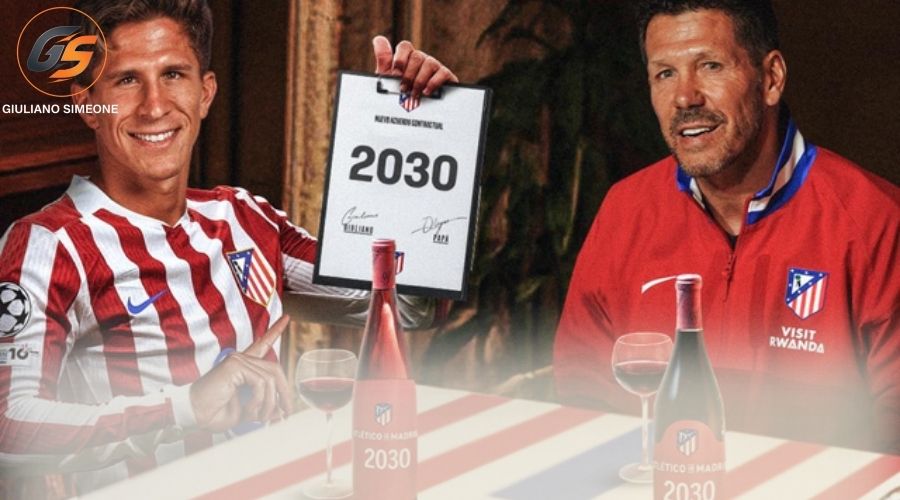
The announcement of Giuliano Simeone contract 2030 is more than administrative news. It reflects Atlético Madrid’s commitment to structural continuity, tactical clarity, and psychological alignment. The deal signals confidence in a player who fits the demands of modern football without demanding the spotlight.
Rather than focusing on duration, the contract reveals how clubs are increasingly planning through roles, systems, and long-term identity. In that sense, the renewal is a statement about process as much as personnel.
At the highest level, moments expose structure.

Giuliano Simeone’s role as CEO HITCLUB represents continuity rather than transformation. The discipline, structure, and system thinking shaped in professional football remain central to his leadership approach.